Your Complete Outdoor Sauna Guide
Types, wood, heaters & what to know before you buy
Buying an outdoor sauna is one of those decisions you'll either get right and love for decades - or rush and regret within a year. This guide covers everything worth knowing: the different sauna styles, which wood holds up best, how heaters actually work, what goes underneath, and the questions to ask before you spend a dollar.
Whether you're a first-time buyer or upgrading from a commercial sauna experience, this is the resource we wish existed when we started building saunas over twenty years ago. Browse our full sauna collection alongside this guide, or connect with a dealer to talk through your space.
- Four sauna styles suit different needs: barrel (fastest heat), cabin (most layout flexibility), pod (extra headroom), and cube (modern glass design)
- Western red cedar is the gold standard for outdoor use
- Electric heaters run on 220V/40A and heat up in 30–45 minutes; wood-burning stoves need no electricity
- Budget $300–$800 for electrical hookup
- Any flat, drained surface works as a base, and two people can assemble most saunas in a weekend
The Four Styles of Outdoor Sauna
The four main outdoor sauna styles are barrel, cabin, pod, and modern cube. Each design affects heat circulation, space requirements, and weather performance differently. Barrel saunas heat fastest, cabins offer the most layout flexibility, pods provide extra headroom, and cubes bring contemporary glass-front design.
Not every sauna shape is just about looks. The design affects how heat circulates, how much space you need, and how the sauna weathers over time.
Barrel Saunas
The barrel sauna is the most recognized outdoor sauna shape in North America, and there's good reason for it. The curved walls create a natural convection loop - hot air rises to the top of the barrel, rolls along the ceiling, and circulates back down. That means a barrel sauna heats up faster and more evenly than a rectangular room of the same volume, because you're not wasting energy heating dead space in square corners.
Barrel saunas typically come in 6-foot, 7-foot, and 8-foot lengths with a 7-foot diameter. The staves are 1.5 inches thick, held together by marine-grade aluminum bands with stainless steel tightening hardware. They sit on solid wood cradles. Most can be extended with a front porch for cooling down or a changeroom with benches when the sauna sits farther from the house.
The classic barrel - curved walls create a natural convection loop and the fastest heat-up time of any style.
Cabin Saunas
The traditional rectangular cabin sauna is what most people picture when they think of a Finnish sauna. Solid tongue-and-groove log walls joined with dovetail corners give you a building that's genuinely sturdy - this is proper joinery, not a prefab shed.
Cabin saunas offer more interior flexibility than barrels. You can configure L-shaped bench layouts, add windows on one or both sides of the door, and choose between one-tier and two-tier seating. They work well tucked against a fence or positioned as a freestanding structure. Indoor cabin saunas use the same construction and bring the experience inside your home or basement.
Cabin saunas use tongue-and-groove walls with dovetail corners - proper joinery built to last decades.
POD Saunas
The POD sauna has an organic, rain-drop shape that gives you noticeably more headroom than a barrel - a real difference when you're sitting on the upper bench. The curved roof sheds snow and rain naturally, and the wider interior feels more spacious even in smaller models.
POD saunas require a roofing finish on the outside - either cedar bevel siding or shingles - which adds an extra step during assembly but gives you more control over the final appearance. The mini POD is a compact version designed for tighter spaces without sacrificing the distinctive shape.
The POD's organic rain-drop shape provides extra headroom and sheds snow naturally.
Modern Cube Saunas
If a barrel sauna is the cottage classic, the cube sauna is its contemporary counterpart. These modular designs feature large glass panels - bronze tempered, mirrorpane, or semi-privacy options with cedar slats - that let you watch the snow fall or the sun set while you're sitting in 190°F heat.
Cube saunas are fully insulated with 3-inch EPS foam (R-value of 11.25) in the walls, floor, and roof. The exterior can be finished in black metal siding or natural cedar. Benches are 20 inches wide - wider than most traditional saunas - and panels can be customized to mix solid wood and glass in whatever configuration suits your space.
The Pure Cube collection brings contemporary glass-front design and insulated modular panels.
Which style is right for you?Barrel saunas are the best all-around choice for backyards and cottages. Cabin saunas offer the most interior space and layout flexibility. POD saunas bring extra headroom and a distinctive look. Cube saunas suit homeowners who want modern design with large glass views.
| Style | Best For | Heat-Up | Capacity |
|---|---|---|---|
| Barrel | All-around, cottages | Fastest | 2-8 people |
| Cabin | Layout flexibility | Standard | 2-8 people |
| POD | Headroom, unique look | Standard | 2-6 people |
| Cube | Modern design, glass | Fast (insulated) | 2-6 people |
Choosing Your Wood
Western red cedar is the gold standard for outdoor saunas - naturally rot-resistant, aromatic, and thermally stable. Eastern white cedar offers the same durability at a lower price point. Both are Canadian-sourced and sustainably harvested. Avoid hemlock, spruce, or pine for year-round outdoor use.
Left: Luna sauna in clear western red cedar - warm reddish tones. Right: same Luna model in eastern white cedar - lighter colour, equally durable
The wood your sauna is made from isn't just an aesthetic choice - it affects durability, aroma, heat retention, and how much maintenance you'll do over the years.
Western Red Cedar
This is the gold standard for outdoor sauna construction. Western red cedar grows along the coast of British Columbia and is naturally rich in thujaplicins - oils that make the wood resistant to moisture, decay, insects, and fungal growth without any chemical treatment. When heat hits cedar, it releases a warm, woodsy scent that most sauna users describe as one of their favourite parts of the ritual.
Cedar comes in two grades: clear cedar with minimal knots for a clean, uniform look, and knotty cedar with visible knots for a more rustic character. Both grades are the same species with the same durability - the choice is purely aesthetic. The Dundalk Collection uses premium western red cedar in both clear and knotty options, sourced from certified sustainable lumber mills in British Columbia and Ontario.
Eastern White Cedar
White cedar is lighter in colour with tighter, more refined knots. It's sourced from Ontario mills and offers the same natural resistance to moisture and decay at a more accessible price point. It grows closer to where most Canadian saunas are manufactured, reducing shipping costs and lead times. The Canadian Timber Collection uses eastern white cedar - a strong choice if you want an authentic cedar sauna without the premium price tag.
What About Other Woods?
You'll see hemlock, spruce, and pine in some imported saunas. These species lack cedar's natural rot resistance and typically require chemical treatment to survive outdoor conditions. They also don't produce the same aromatic experience. For a sauna that lives outdoors year-round in a Canadian climate, cedar remains the strongest choice.
Heater Options: Electric vs. Wood-Burning
Electric heaters run on 220V/40A, heat the sauna in 30-45 minutes, and use the traditional rock-and-steam method. Wood-burning stoves need no electricity, heat in 45-75 minutes, and offer a fire ritual experience. Both produce authentic löyly (steam) from heated rocks.
Left: Electric heater - 220V/40A, 30-45 min heat-up, the simplest choice. Right: Wood-burning stove - off-grid capable, fire ritual, 45-75 min heat-up.
The heater is the heart of your sauna, and the choice between electric and wood-burning changes the experience more than any other decision.
Electric Sauna Heaters
Electric heaters are the most popular choice for backyard saunas. They run on a 220-volt, 40-amp circuit - the same electrical requirements as a clothes dryer. You flip a switch or set a timer, and the sauna reaches 190°F in 30 to 45 minutes depending on outdoor temperature and sauna size.
Every electric heater uses the traditional rock-and-steam method. A bed of sauna stones sits on top of the heating elements, and you pour water over the rocks to create löyly - the burst of humid steam that's central to the Finnish sauna tradition. Wall-mounted models save floor space in smaller saunas, while floor-standing models suit larger interiors. Some offer Wi-Fi controls for preheating from your phone. Always verify ETL or ULC certification before purchasing - the heater only draws power while you're using it, unlike a hot tub that runs continuously.
Wood-Burning Sauna Stoves
A wood-burning stove brings something electric can't replicate: the crackle of a fire, the ritual of building it, and the ability to run your sauna completely off-grid. No electrical connection needed. Light a fire and you're soaking in heat within an hour, with heat-up times of 45 to 75 minutes.
Wood-fired heaters use the same rock bed as electric models - you still get löyly by pouring water over the stones. Stainless steel models with glass doors let you watch the fire from inside. Chimney kits run the flue through the back wall. Maintenance involves clearing ash periodically and inspecting the chimney each season.
The practical questionIf your sauna is within 30 feet of your electrical panel, electric is the simplest choice. If you're building at a remote cottage, off-grid property, or you simply love the ritual of fire, wood-burning is worth the extra effort.
Curious which sauna fits your space?
Over 30 models across three collections.
Installation and Assembly
Most outdoor saunas ship as pre-fabricated kits requiring only standard hand tools. If you're comfortable with basic assembly work - a deck, a shed, or even flat-pack furniture - a sauna build is well within reach. Barrel and cabin saunas take a weekend with two people; cubes take about eight hours with three.
Most outdoor saunas ship as pre-fabricated kits. The staves, benches, door, heater platform, and hardware arrive on a pallet with detailed assembly guides. If you've tackled a deck, shed, or furniture build before, a sauna assembly is well within reach.
Two people can assemble a barrel or cabin sauna in a single weekend. Cube saunas with insulated panels typically take about eight hours with three people. No specialized carpentry skills are required - but you should be comfortable reading assembly drawings and working methodically through a step-by-step process. For walkthroughs on specific models, our YouTube channel has assembly videos covering most of the lineup.
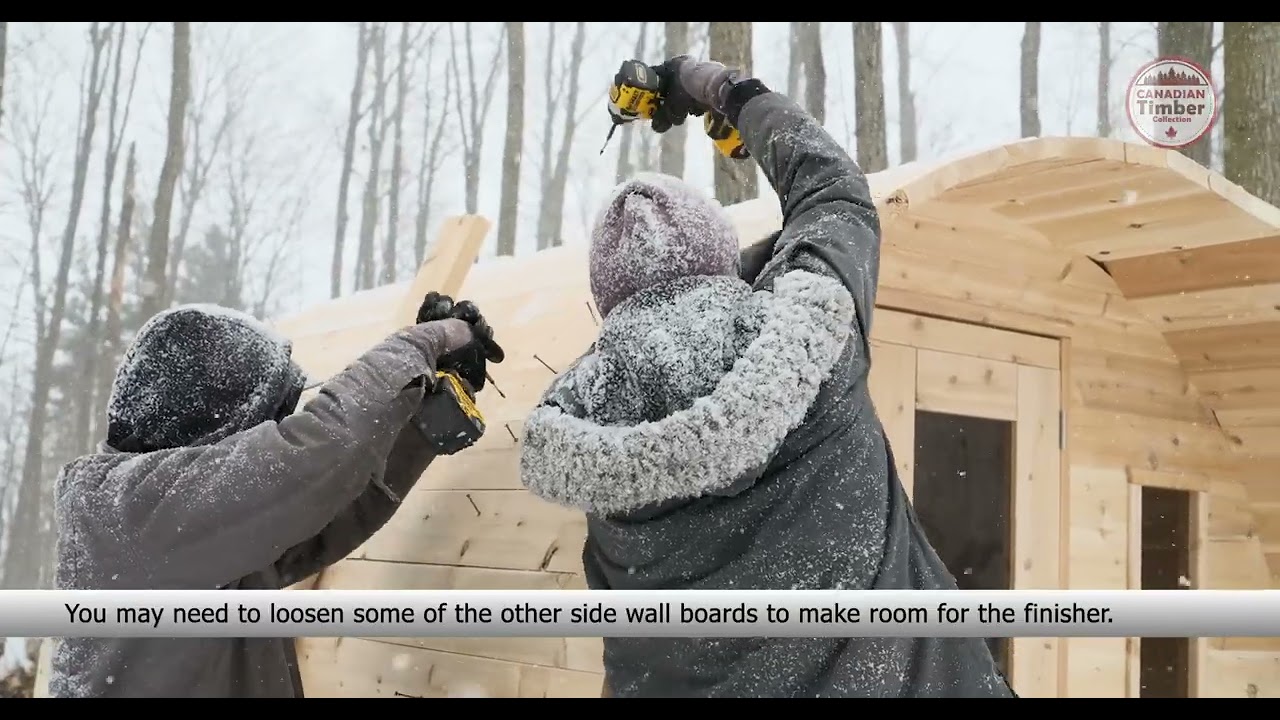
Step-by-step assembly walkthrough for the LeisureCraft barrel sauna - about 12 minutes from pallet to first löyly.
Tools You'll Need
| Tool | Purpose |
|---|---|
| Socket wrench set (3/4") | Tightening aluminum bands and hardware |
| Cordless drill / driver | Driving screws for benches, floor, and trim |
| 4-foot level | Ensuring base and walls are plumb and level |
| Rubber mallet | Seating staves and tongue-and-groove boards |
| Tape measure | Verifying dimensions during assembly |
| Step ladder | Reaching the top of barrel and cabin saunas |
| Utility knife | Cutting EPDM rubber roofing membrane |
The one step that does require a professional: electrical. The heater connection must be done by a licensed electrician. This is a code requirement across Canada, and skipping it voids most warranties. Budget $300 to $800 for the electrical hookup depending on how far your sauna sits from the panel.
Wood-burning saunas skip the electrician entirely. Assemble, load the stove, run the chimney, and you're ready to fire.
What Goes Underneath: Bases and Foundations
Your sauna needs a flat, stable, well-drained surface. Concrete pads, compacted crushed gravel (3/4-inch clear stone), patio stones on gravel base, and wooden decks all work. Never place a sauna directly on grass or bare soil - moisture will wick into the wood.
Concrete pad is the most permanent solution. A 4-inch slab gives you decades of stability. This is the preferred choice for cube saunas with insulated floors.
Crushed gravel (3/4-inch clear stone) compacted to 4 inches works well for barrel and cabin saunas. It drains naturally and is easy to level. This is the most popular choice for backyard installations.
Patio stones or interlocking pavers create a clean, level surface. Make sure they're set on a compacted gravel base so they don't shift over time.
Wooden deck works if the structure can handle the weight. A barrel sauna can weigh 1,500 to 2,500 pounds depending on size and wood type. Verify your deck's load capacity before installation.
The ground beneath should slope slightly away from the sauna so water drains clear. Never place a sauna directly on grass or bare soil - moisture will wick up into the wood and accelerate decay.
Benches and Interior Layout
Two-tier benches are standard, with the upper bench running 15-25°F hotter than the lower. Signature bench upgrades add curved seats and backrests. Lounge benches allow full-body recline in larger barrels. Cube saunas offer extra-wide 20-inch benches for added comfort.
Left: Traditional curved benches in a barrel sauna. Right: Wider 20-inch benches with backrests in the Pure Cube collection.
Two-tier benches are standard in most outdoor saunas. The upper bench sits in the hottest air (heat rises), typically 15 to 25°F warmer than the lower bench. Experienced sauna users sit on top; newcomers or those who prefer gentler heat sit below.
Signature bench upgrades replace flat benches with curved seats, integrated backrests, and a finished floor - a noticeable comfort improvement for longer sessions.
Lounge benches are available in larger barrel saunas (7-foot diameter, 7 or 8-foot length) and let you stretch out fully. This is the closest you'll get to lying down in a barrel sauna.
L-shaped bench layouts are available in cabin and cube saunas, maximizing seating along two walls. Cube saunas offer 20-inch-wide benches - about 4 inches wider than standard - which makes a surprising difference in comfort when you're sitting for 15 to 20 minutes.
Use towels on benches during every session. It protects the wood and absorbs sweat, making cleanup simple.
What to Look for as a Buyer
Focus on wood thickness (1.5" minimum for barrel staves), hardware quality (marine-grade aluminum, stainless steel), heater certification (ETL/ULC/CSA), warranty length (5 years is standard for premium), and where the sauna is actually manufactured.
Not all outdoor saunas are built the same, and the differences aren't always visible in photos. Here's what separates a sauna that lasts decades from one that disappoints within a few years.
Wood thickness matters. Barrel sauna staves should be at least 1.5 inches thick. Thinner wood means less insulation, faster heat loss, and shorter lifespan. Ask for the exact measurement.
Hardware quality is a tell. Marine-grade aluminum bands and stainless steel hardware resist corrosion in wet, high-heat environments. Zinc-plated steel will rust. Check what's holding your sauna together.
Canadian-made vs. imported isn't about patriotism - it's about the wood's journey. Cedar sourced and manufactured in Canada avoids the long supply chains, extended storage, and climate transitions that can stress wood before it ever reaches your backyard.
Warranty terms reveal confidence. A 5-year warranty on materials and workmanship is what LeisureCraft offers on its all collections. Read the fine print - does it cover parts only or labour too?
Heater certification is non-negotiable. ETL, ULC, or CSA certification means the heater has been independently tested for safety. Never install an uncertified heater.
Ask about assembly support. Quality manufacturers provide detailed assembly guides, videos, and responsive support. If a company can't show you exactly how their sauna goes together before you buy, that's a red flag.
Frequently Asked Questions
A well-built outdoor sauna reaches 190°F and above, depending on the outdoor temperature and heater size. In colder weather, heat-up takes slightly longer but the sauna still reaches full temperature.
Yes. A quality cedar sauna with 1.5-inch thick staves performs well even at −30°C. The barrel shape minimizes surface area exposed to wind, and the thick wood provides natural insulation. Cube saunas with 3-inch EPS insulation (R-value 11.25) handle extreme cold particularly well. Heat-up takes 15–20 minutes longer in deep winter, but the sauna still reaches 190°F. Thousands of LeisureCraft saunas operate year-round across northern Canada.
An electric sauna heater runs on 220V and 40 amps — comparable to running a clothes dryer. A typical one-hour session costs $1 to $3 depending on local electricity rates. If you're using your sauna three to four times per week, expect roughly $15 to $45 per month. The heater only draws power while you're in it, so there's no standby cost like a hot tub.
Yes. Indoor cabin saunas use the same construction and work just as well — heat-up times are actually shorter indoors. You'll need proper ventilation and a floor drain or waterproof flooring.
No — cedar doesn't need a finish to last. You can add a sauna-suitable exterior stain for UV and weather protection if you like; LeisureCraft recommends and stocks Livos. Inside, leave the wood bare — never stain, seal, or varnish a sauna's interior, though an optional penetrating oil like Meldos can nourish it. Untreated, cedar mellows to a silvery grey that many owners prefer.
After each use, ventilate the sauna by leaving the door open, wipe down the benches, and rinse with cold water to close the wood's pores. Tighten the aluminum bands after the first month and check them seasonally. Cedar does most of the work for you.
With basic maintenance, a quality cedar sauna lasts 15 to 25 years. The wood's natural resistance to moisture and decay means you're not fighting rot — you're simply keeping the surface clean and the bands tight.
Daily sauna use is safe for most healthy adults. If you're new to sauna, start with 10–15 minute sessions at a moderate temperature and work up gradually. Experienced users typically enjoy 15–20 minutes per session, often with a cool-down break and a second round. Stay hydrated, listen to your body, and consult your doctor if you have any cardiovascular conditions.
Ready to Find Your Sauna?
The right outdoor sauna depends on your space, your style, and how you want to use it.
- Finnish Sauna Traditions and Why They Still Matter
- Contrast Therapy: A Complete Guide to Sauna and Cold Plunge
- Cedar vs Hemlock vs Thermowood: A Sauna Manufacturer's Guide
- The Year-Round Outdoor Sauna Maintenance Guide
- Wood-Fired Hot Tubs: Everything You Need to Know Before You Buy
- Sauna Heater Buying Guide: How to Choose the Right One